

Millions of people watched the crew of Artemis II blast off from NASA’s Kennedy Space Centre in Cape Canaveral, Florida on 1st April, the first crewed flight to the moon since 1972. Fascination with space exploration isn’t anything new – ancient civilizations studied ways to track celestial bodies and it was in 1610 there were the first observations of the night sky through one of the earliest telescopes.
When you gaze up into the sky you can’t help but wonder what is out there. Whilst actual space exploration may be limited to a few – there are ways in which everyone can get a little closer to space through the work of a multidisciplinary artist, Luke Jerram.
Using imagery from NASA, his installations of Helios, Gaia, Mars and Museum of the Moon enable everyone to get up close and personal space in some unsuspecting locations around the world. The scale models offer some perspective on what is out there, beyond the edge of what we can see.
Museum of the Moon
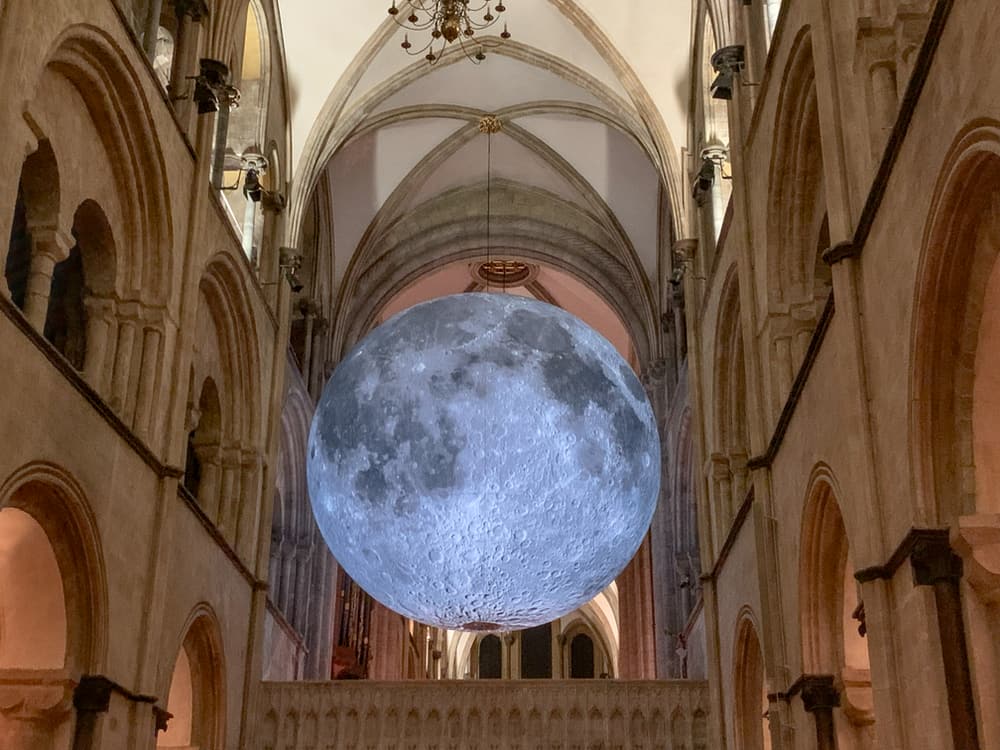
At seven metres in diameter, the moon is at a scale of 1:500,000 (so every centimeter on the sculpture represents 5km of the moon’s surface). Internally lit, the Museum of the Moon is accompanied by a score composed by the BAFTA and Ivor Novello award winning composer, Dan Jones.
You can see the Museum of the Moon at the National Museum Cardiff until 12th April.
Helios
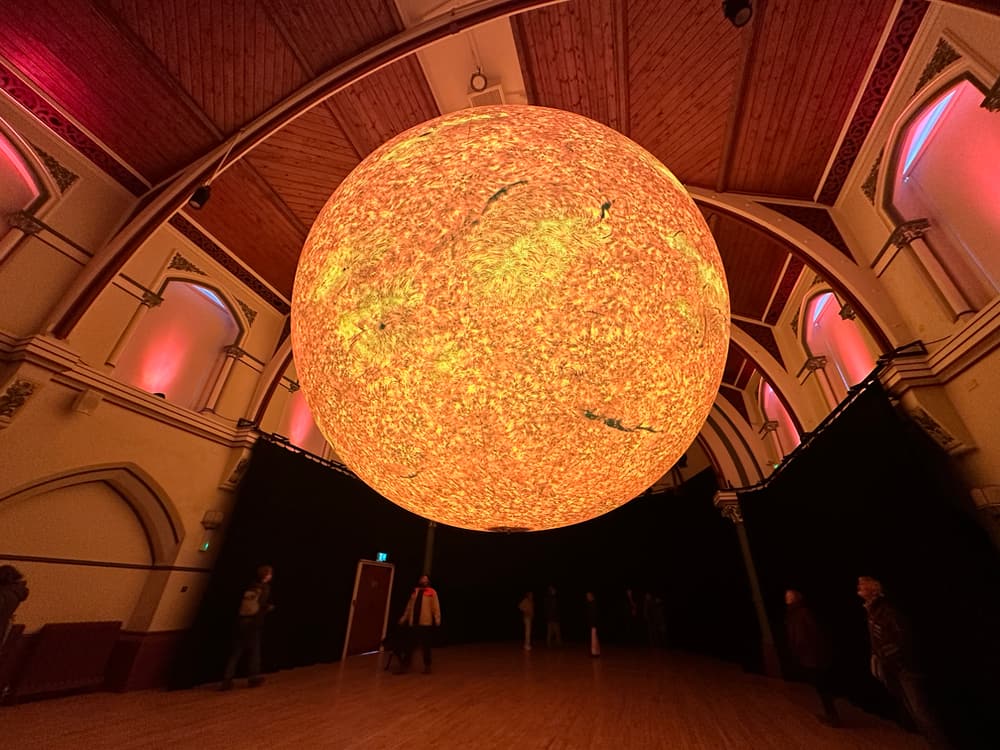
At seven metres in diameter, Helios is at a scale of 1:200 million (so every centimeter on the sculpture represents 2000km of the sun’surface). Internally lit, Helios provides a safe opportunity to see the sun up close. It also includes the source of solar flares that enabled the Northern Lights to be visible in the UK back in 2024. Helios is a fusion of solar imagery, animated lighting and a specially created sound composition by Duncan Speakman and Sarah Anderson.
You can see Helios at the following locations:
- Grimsby Minster: 9th April to 4th May
- Wakefield Exchange: 12th June to 6th September
- Southwell Minster: 29th July to 15th August
- Goole 200: 25th September to 5th October
Gaia
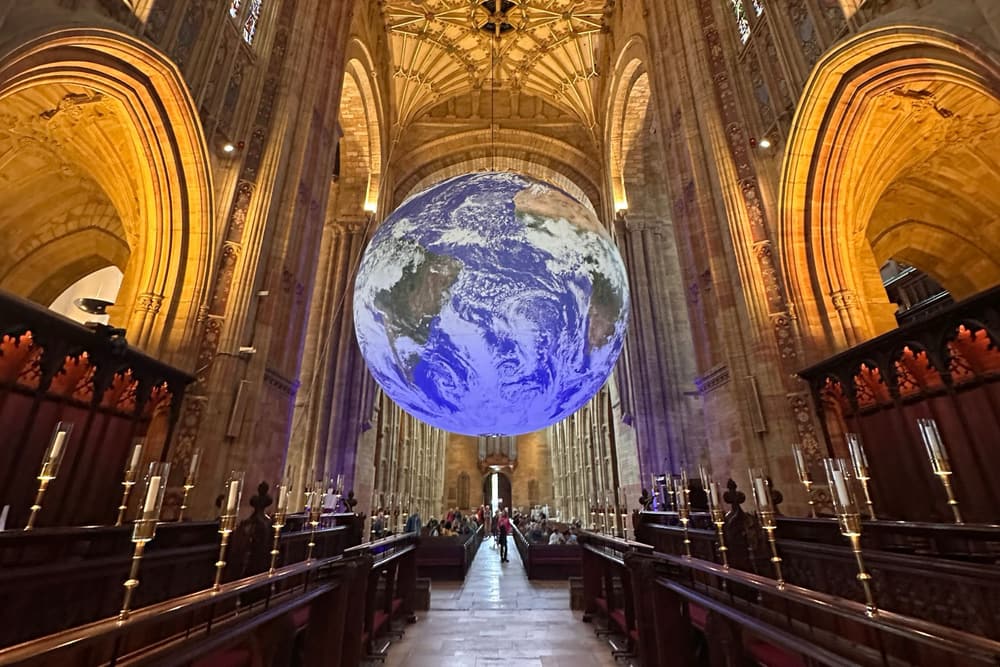
Gaia is 1.8 million times smaller than Earth, with each centimetre on the globe representing 18km on the surface of the Earth. As you sit back and watch her spin, you get to see Earth just as those in Artemis II have, and just as those in Apollo 17 did back in 1972 when the crew described it as a blue marble floating in space.
Gaia can be seen at Kendal Calling from 30th July to 2nd August.
Mars
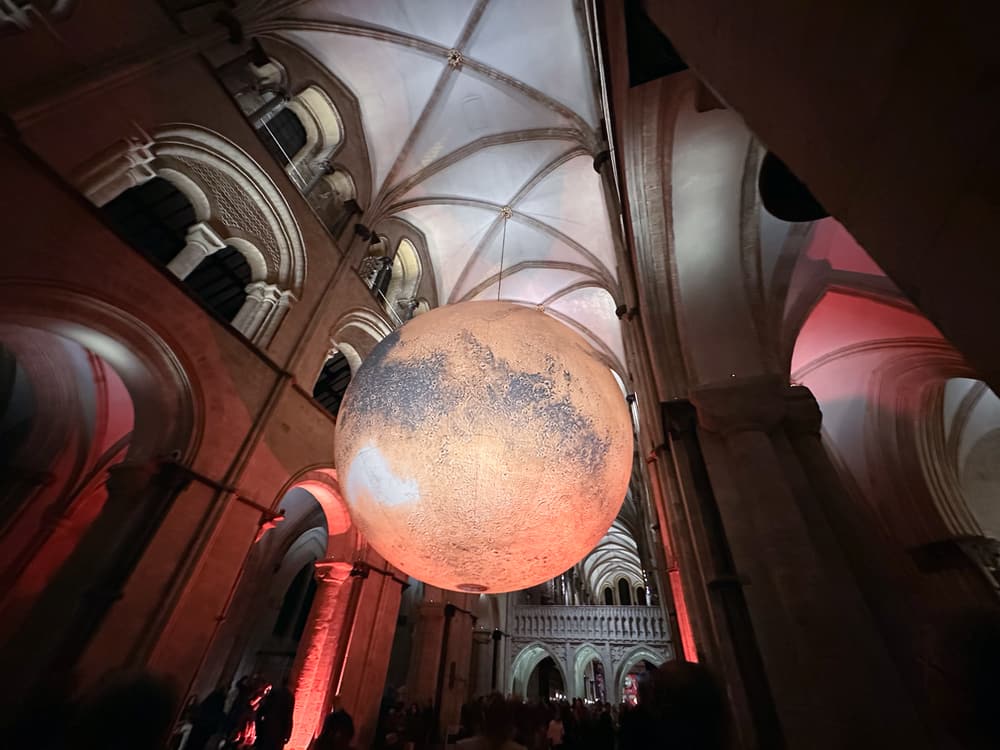
The red planet is on that can often be seen with the naked eye in the night sky. This installation features NASA photography and is around one million times smaller than the actual planet (one centimetre on the installation represents 10km on the surface of Mars). We are offered the opportunity to view the red planet as if from the sky.
Mars is currently on display at the Draper Museum, MA, USA.
For more details of these art installations and where you can see them – please visit lukejerram.com/artworks/
Author: Holly Barber