Our journey continues further south, on towards the frozen south. Antarctica. Although not my first trip here, it is breathtaking and awe-inspiring. As I marvel at the towering icebergs whilst watching playful whales breach around the ship, I have to pinch myself that I’m really here. Words can hardly do justice to the beauty of this place.
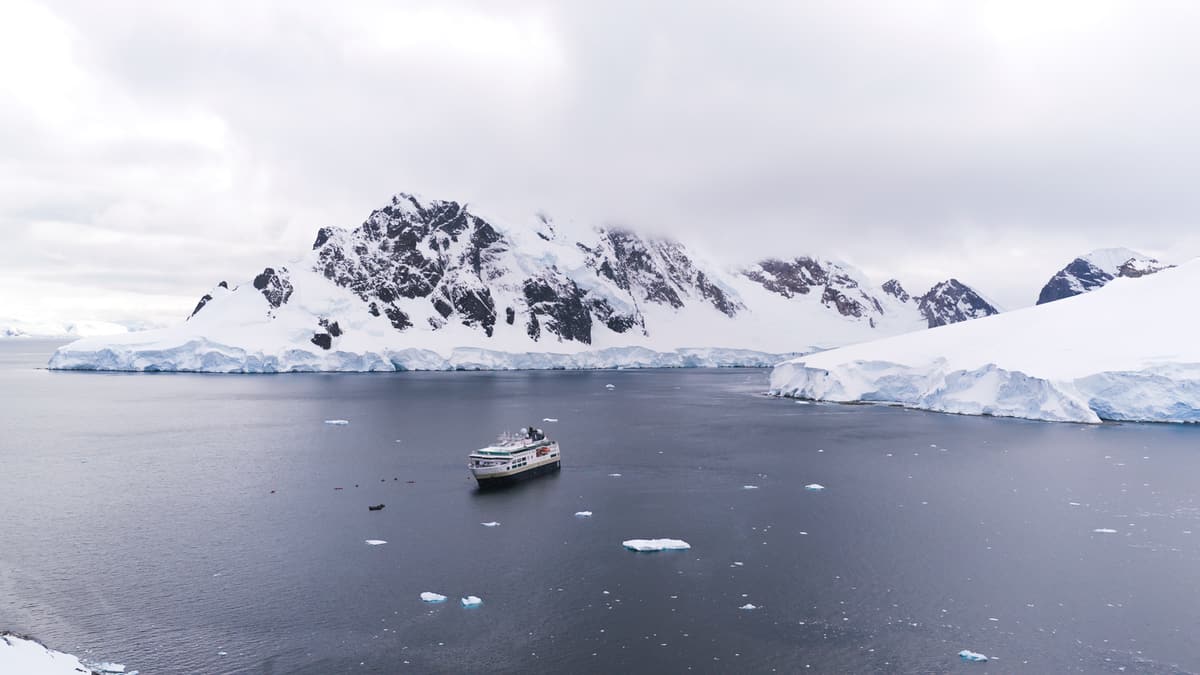
That said, it is also brutal here. As we approach the vast expanse of Antarctica, I take some time to speak with MS Fram’s Captain Terje Nilsen about the dangers of navigating through the sea ice here. Antarctica holds the largest ice sheet on earth, containing around 90% of the planet’s freshwater. Some of the icebergs found here are thought to be more than 100,000 years old.
Jumping back on the zodiac, we break through brash ice and make landfall on the frozen continent. It’s a steep and slippery slope that I hike up to get an amazing view overlooking Orne Harbour. Everything feels on an epic scale. The conditions here are unforgiving – it’s extraordinary that wildlife, like the enormous elephant seal I encountered at Yankee Harbour, is able to survive here. I have a much deeper respect for the resilience of wildlife that calls this place home.
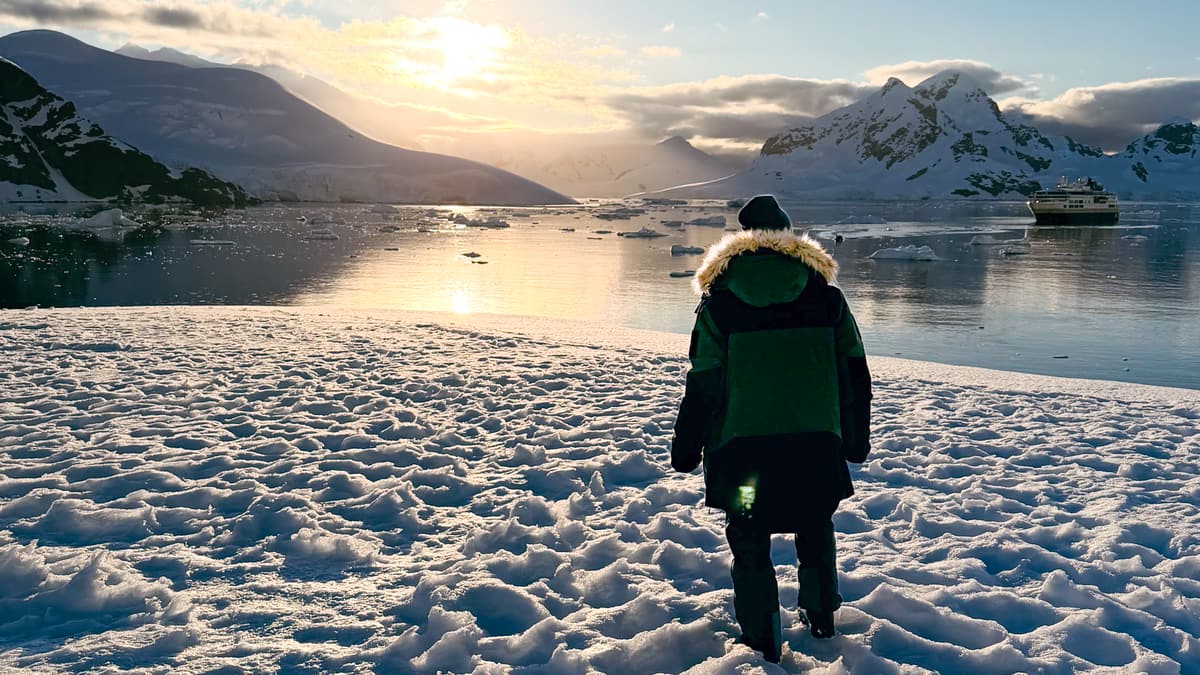
I’m keen to see more local wildlife, so it’s back on to the zodiac as we go in search of whales. The tension builds as we watch penguins dive in and out of the water and seals lounging nearby. Finally though, after several hours of searching, a pod of humpback and minke whales appear. It’s magical to watch them and I sight I doubt I’ll ever tire of. The waters of Antarctica are home to tens of thousands of whales, including several species who migrate here annually to feed in the nutrient rich waters.
The MS Fram has its own science lab on board. Getting back on board, I meet up with marie expert Zoe who is examining plankton under the microscope. These tiny organisms are the base of the entire marine food chain and are of critical importance to Antarctica. In addition to being a source of food for those higher up the food chain, they also play a vital role in regulating the Earth’s climate through the production of oxygen and sequestering carbon. As much as we need trees to breathe – we need plankton too!
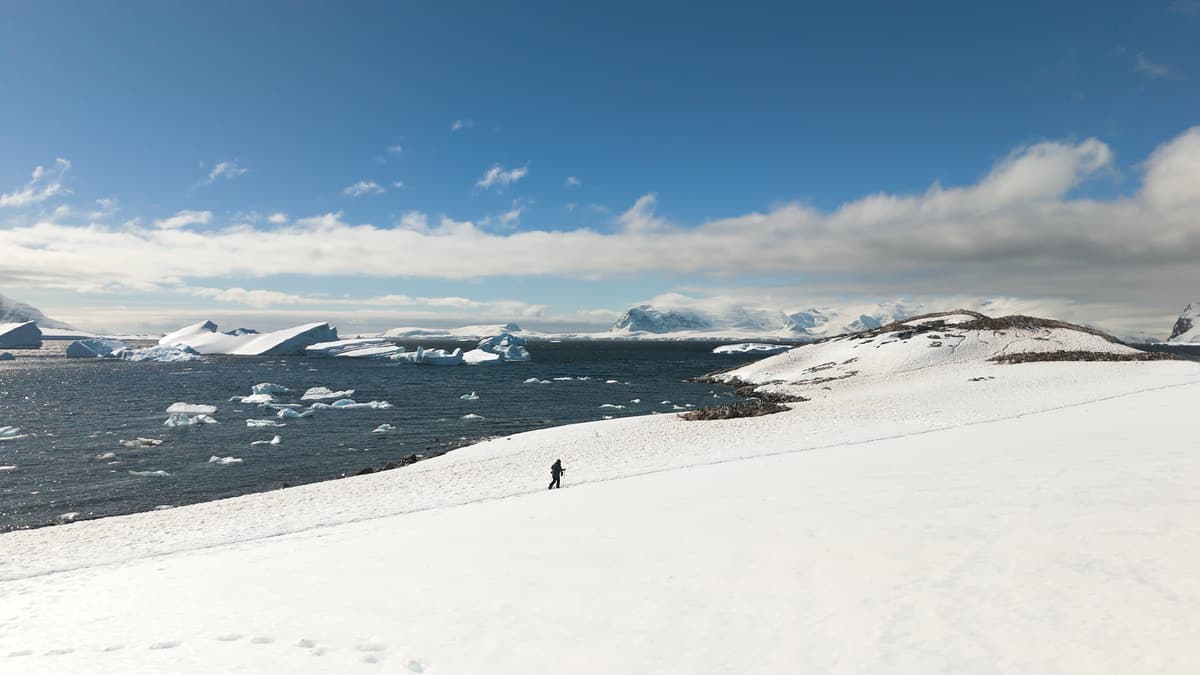
I have camped in some extraordinary places around the world in the past – but this trip may have topped the lot. After a snowshoe walk through the untouched and still landscape of Antarctica, I prepared myself for a night camping on the ice. It’s amazing to think I’m here after the past couple of years that I’ve had, that we’ve all had. From the global pandemic that halted all world travel to a cancer diagnosis that quite literally stopped me in my tracks – I am so grateful and thankful that I am here now. Time spent in nature has been key to my recovery – and being in this vast wilderness of ice now I find truly humbling.
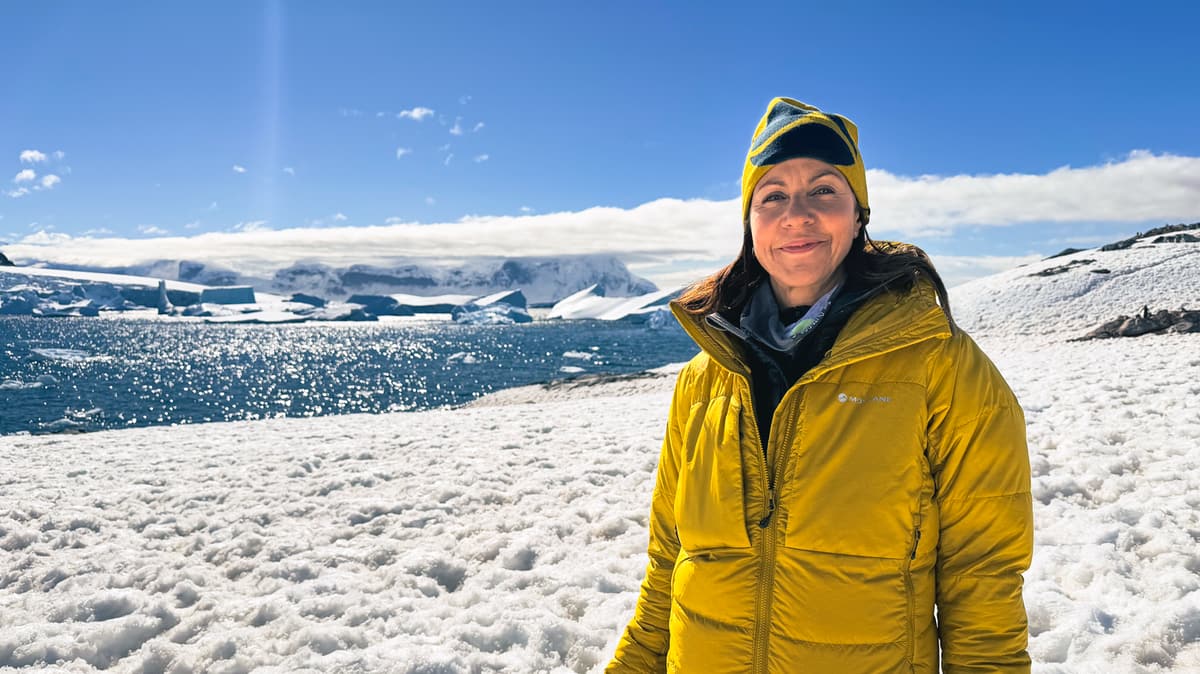
My Antarctica adventure isn’t yet over though. I still have time to explore Cuverville Island which is home to one of the largest Gentoo penguin colonies in Antarctica. Here you can see the famous “penguin highways” between the sea and the nest sites.
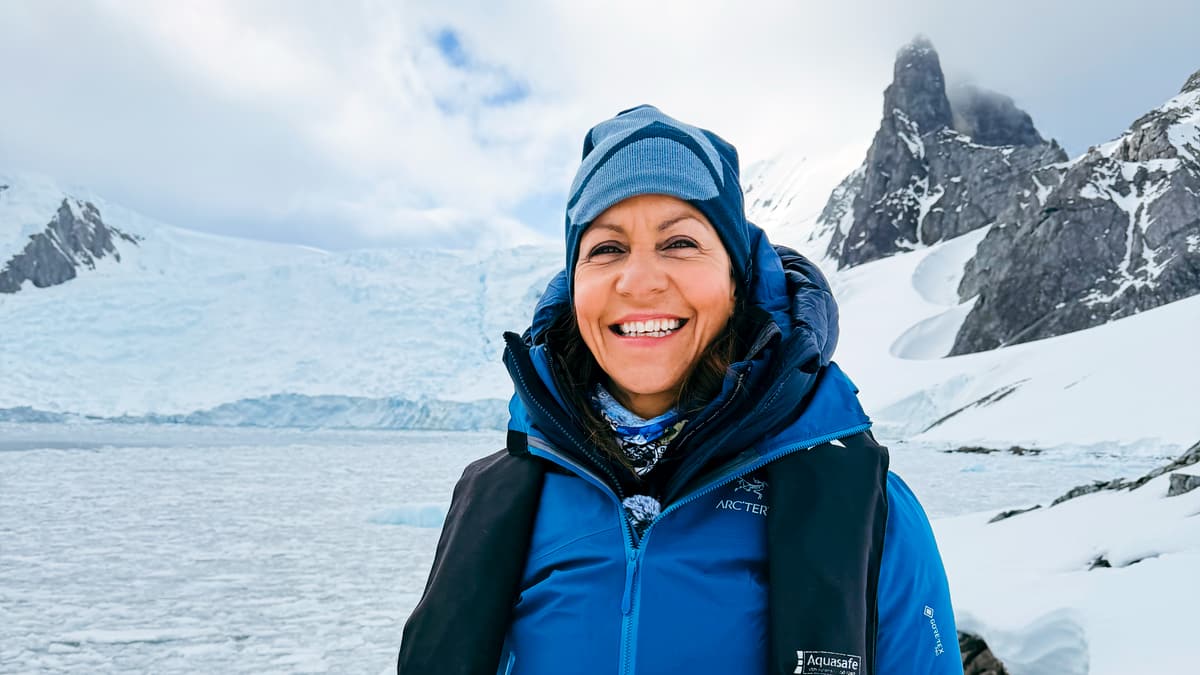
Before it’s time to head north once more, we take a cruise through the icebergs. They’re absolutely beautiful to see – the colours, the shapes, the stories that are held within them. As I witness one collapse into the ocean I am again reminded not only of the fragility of the natural world – but also of the awe-inspiring power of the frozen south.